
We’ve all heard the old cliche – less is more. But, is it really true? When it comes to web design, the answer is yes. Simple website design offers benefits that more complex websites can’t match. While you may like the look of elaborate designs, when designing for function simplicity will win out every time. Digital marketing expert Neil Patel points out: Far too often I see websites try to jam too much information into a very small space. The navigation is confusing, and it’s overwhelming for anyone viewing the site. If this is starting to sound like the layout of your website, it could be the reason why your conversion rates are unsatisfactory. Even if you don’t think your design is too cluttered, there’s always room for improvement. Taking the time to streamline your website will create a better user experience and serve your business better. Here are 5 important benefits of simple website designs: Simple websites convert better. Simple web designs load faster. Simple designs are more mobile-friendly. Simple websites cost less. Simple websites reduce user friction. Let’s take a look at each of these benefits to see how you can make it work on your business website. Simple Websites Convert Better. The website landing page is a specific type of webpage whose entire purpose is to convert. The golden rule of designing a landing page that converts well? Keep it simple. Simple design makes it easy to draw the viewer’s eye to the most important area of the page – and, if you’re looking for conversions, that’s your call to action. Navigating a cluttered interface is no fun. It can be confusing, overwhelming and frustrating. And, it makes it harder for users to find and complete a call to action. Here are two easy ways to simplify your web design to improve conversions… Limit Your Menu Options It can be tempting to show your audience everything you have to offer right off the bat. But, that may not be the best choice. You want your website to be informative and user-friendly. But, offering too many navigation options is more likely to overwhelm your viewers than it is to help them. You’ll see conversions increase if you limit your menu options to just the essentials. A menu full of intriguing destinations on your website many entice viewers to click in deeper before they have a chance to act on the call to action right in front of them. Conversely, users may be paralyzed by a wealth of menu options and subsequently click away entirely if they don’t see what they want right away. The more menu options are present (and the more information your viewers have to sift through), the more decisions they have to make. And, decision fatigue is a real threat to your conversions. Psychologist Barry Schwartz, the author of The Paradox of Choice, points out: The more options we have, the less likely we are to make a choice because we’re paralyzed [with indecision]; or, if we overcome paralysis and make a choice, we tend to be less satisfied with our choice later. The bar [for obtaining satisfaction] rises with the more options people have to choose from. Make life easier for your audience by giving them as few navigation decisions to make as possible. And make sure the decisions they do have to make really count. Focus Attention on Your Call to Action The more opportunities you provide on your website to buy something, sign up for emails, or subscribe to your blog, the better… Right? Wrong. Pulling your viewer’s focus in too many directions at once will decrease the likelihood that they will actually act on any of those opportunities. (Decision fatigue – remember?) Simplify your web page and increase your conversions by eliminating anything that may draw focus from your call to action. In fact, go one step further, by using the design elements to guide the eye directly to the CTA. If you’re aiming for strong conversions, make your call to action the primary focus of your webpage. You should, of course, feel free to promote multiple offers on your website. But, limit each offer to its own page so that it can get the attention it truly deserves. Simple Website Designs Load Faster. Website load speeds are vitally important to the user experience; and, as a result, to your business. Did you know that viewers start abandoning your website after mere seconds of load time? Between seconds 4 and 5 of your website’s load time, 20% of viewers have already left your site. The number only increases from there. And, not only that, search engines take your website’s load time into consideration when calculating your ranking. A faster load time means a higher placement in the search engine results. If you want to optimize your website for speed – which you should – complex web designs are the enemy. So, pare back complex graphics. Simplify elaborate layouts. Minimize your photos and graphics to speed up load times. Trim your copy and compress your video files. Faster load times keep viewers around longer, create a better user experience, and increase the likelihood that viewers will even find your website in the first place. Simple Designs Are More Mobile-Friendly. As of 2017, 63% of all web traffic took place on mobile devices. This means that how your website looks on mobile is just as important – if not more so – than how it looks on a laptop or desktop computer. Simple web design is easier to translate into a small mobile screen than a busy, visually complex design. This may be one of the most compelling benefits of simple design – with so much web traffic via mobile, creating ease-of-use for mobile users is a no-brainer. Sure, you could maintain two websites – one for desktop and one for mobile. But, that requires twice as much work. It’s far better to have one simple responsive design that can easily transition from laptop to phone to tablet while maintaining the design’s integrity. With fewer moving pieces to juggle, simple websites with limited design elements are just naturally more flexible.
Website design is a versatile and ever-changing field. Website designers must keep up with industry news, brush up on their skills, and evolve their style to execute the latest design trends.
01. Keep your homepage minimalistic and free of clutter We rarely read every word on a website. Instead, we quickly scan pages, picking out keywords and sentences. With these known behaviors in mind, it’s better to appeal to emotions rather than word count. The less someone looking at your site has to read, click on or remember, the better they’ll be able to process and evaluate what’s going on in front of them. That makes it more likely for them to do what you wanted them to do in the first place. Text and Calls To Action are necessary, of course, but make sure to break them up into larger subheadings and legible paragraphs. We also suggest using images or icons as alternative ways to communicate your point. 02. Design with the visual hierarchy in mind We’ve come a long way from stone tablets. With computer screens and smartphones, as the technology to display information evolves, it remains the designer’s job to arrange the content in a clear manner. You only have a few seconds to grab someone’s attention and tell them what your site is about. If you establish a clear hierarchy of your information, readers can’t help but unconsciously follow the breadcrumbs you have left for them. Then apply color, contrast, size, and spacing for further accentuation, remaining conscious of what is drawing attention to your page and making sure that it’s always intentional. One of the best design elements we have found for creating a strong visual hierarchy are strips: These will help organize your website into clear, digestible pieces of content. 03. Create easy to read website content “Readability” measures how easy it is for people to recognize words, sentences, and phrases. When your site’s readability is high, users will be able to efficiently scan your site and take in the information in the text without much effort. Achieving website readability is relatively easy; try these key rules: Contrast is key It’s very important to have sufficient contrast between your text and its background so that the text is clear. You most likely have carefully selected colors that are part of your brand identity and they should be represented on your website. Feel free to play with colors, just don’t sacrifice readability for creativity. You can’t read what you can’t see Early websites had small fonts, but, over time, people realized that 12pt fonts are hard to read online. When a screen is 24 inches from someone’s face, most people will struggle to see smaller fonts. A typical rule of thumb you’ll see on the web is to keep your body text at least 16pt. That’s a good place to start, but keep in mind that this number completely depends on which font you’re using. Serif vs. Sans Serif You might not choose your family, but you do choose the type of font family you use. Serifs are those little projecting points or lines that some fonts have on the ends of their letters – Times New Roman, for instance, is from the Serif fonts family. Sans Serif literally means “without serif”. These fonts are typically the best choice for online texts – like the one you’re currently reading. Side note: We know that script fonts (The ones that look like handwriting) are really cool with all the fancy curves and stuff, but please consider your visitors’ eyes – give them a break! There is such a thing as too many fonts As a rule, don’t use more than three different typefaces throughout a single website. Some projects may call for more elaborate font combinations, but if you do choose to use a variety of fonts, the overall effect should be harmonious, not cluttered. 04. Ensure your site is easy to navigate It may be of your design nature to break the mold, but website navigation is not the place to be avant-garde. Don’t send visitors on a wild goose hunt when wandering through your site. A site with a solid navigation helps search engines index your content while improving the viewers’ experience: Link your logo to your homepage: It’s a common practice that your visitors are used to and will save them some precious clicks. If you don’t have one, we offer logo design as a service. Mind your menu: It should be on the top (in the header) of your website and structured according to the importance of each section. Offer some vertical navigation: If your site is of the long-scrolling variety, try to use an anchor menu. With one click, viewers will be able to quickly go back to the top, down to the bottom or directly to any section of the site. Work on your footer: Your footer is probably the last thing to be seen on your site, so remember to include all the important links there. This may include a shortened version of your menu, social icons and additional important links (terms of use/FAQ/contact/blog etc.) your visitors may need. Keep your important content “Above-The-Fold”: This is less of a “navigation” tip per say, but it is still important to that matter. Remember that your visitors should understand what your website is about without having to scroll. 05. Stay mobile friendly We live in a mobile society, which makes it important to ask the question: What do my visitors see when they access my website on the go? Never fear! We automatically create a mobile-friendly version of your site for you so that you can keep pace with the increasingly mobile world. Be sure to put yourself in the position of the user, and test out every page, user action, and button. Article from https://www.wix.com/blog/2017/10/5-design-tips-for-a-professional-site/
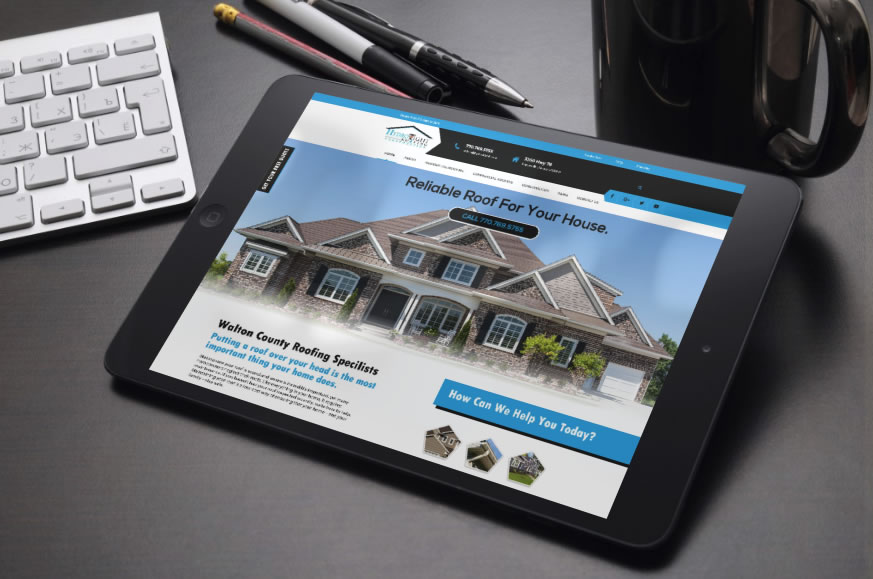
We Welcome Hydro Tight Roofing & Restoration to the EIS family! Hydro Tight Roofing is a family-owned roofing & restoration company located in Loganville, Georgia. They are members of the National Roofing Contractors Association, Master Shingle Certified through CertainTeed, with outstanding reviews on both Kudzu and Angie’s List. They work with new construction, developers, home builders, and homeowners. After taking a look at their current website you will see below we came up with some problematic issues that we wanted to focus on and correct in the newly designed and developed website. The logo looks like it’s just been slapped on the website. It does not blend in well with the site design/layout Load Time – Every single page takes a while to load. 14seconds is what the load time on a 3G service is which is poor and leads to 32% Estimated visitor loss. Navigation is difficult to read No call to action up top Facebook links to the incorrect Facebook business page Google+ links to the incorrect google page Sections on the home page are just plain and not eye-catching. The gallery of work does not show past jobs. Frequently Asked Questions is text-heavy. The service Area page is not professional looking. Favicon is not correct. Top Fixes For the site Load visible content before CSS and JS – If the amount of data required exceeds the initial congestion window, it will require additional round trips between your server and your visitor’s browser. To make pages load faster, limit the size of the data that is needed to render the above-the-fold content of your page. Optimize Images – Images often account for most of the downloaded bytes on a page. Properly formatting and compressing images can save many bytes of data and improve website performance. Leverage Caching – Caching allows a browser to store frequently requested files on the user’s device for a set period of time. When caching is enabled, subsequent page loads can be more efficient. Performance graded at 12 out of 30 – Page requests are 117 which makes the site slower. SEO – Page titles need to be fixed. Scored 20 out of 30. Security graded at 0 out of 10. No SSL certificate means Google does not give good rankings to site without an SSL certificate. Make a call to action. Incorporate a rewards program. Make the site stand out and draw users in. Make a Favicon that is relevant to your business. Show your work in a professional easy to maintain layout. Share the latest news in a blog to help keep fresh content on your website. Add social share buttons on each page. Brand social media to mirror your website. Our Design Presented to the Client
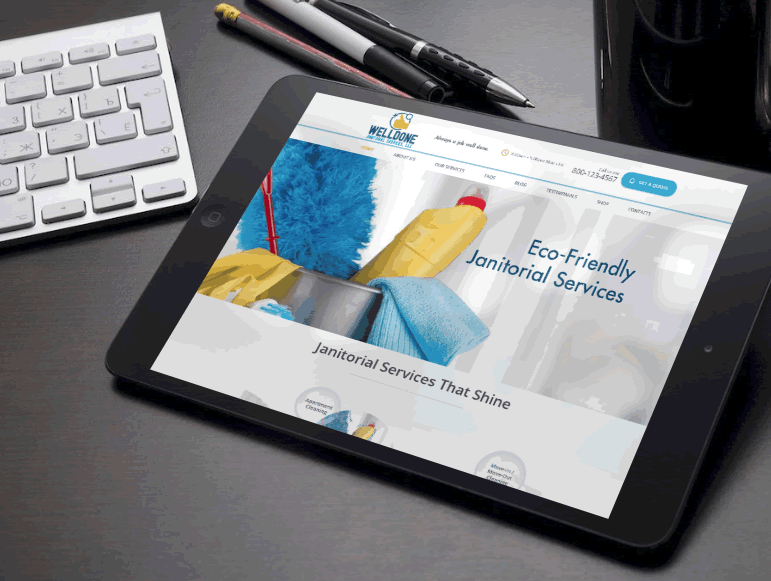
This website design concept has been presented to the client. Welldone Janitorial Services provides cleaning services for Residential & Commercial Business Owners. This concept, when developed, would include the following functions. Responsive/Retina – will be able to re-scale depending on the device it is viewed on. Visual Composer Plugin – which helps make editing easy for the client. Bootstrap – The most popular HTML, CSS and JS framework for developing responsive, mobile first projects on the web. Valid HTML5 & CSS# RTL – Enables a feature in the post editor which allows writing texts in Left-to-right and Right-to-left directions. WPML – WordPress Multilingual plugin Request a date/services Get a Quote form Easily add coupons/edit coupons
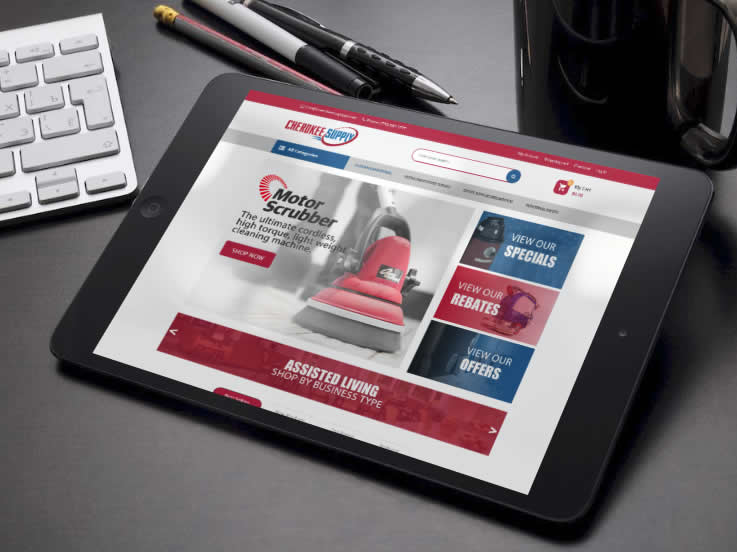
In 2001, Cherokee Supply initially offered janitorial & breakroom supplies that met the immediate needs of their customers. Today, they have expanded their product offerings to include office supplies, facility maintenance needs, and safety products. To keep up with the changing marketplace are developing a new website that will help serve needs of their customers. This will be a full-service website with over 30,000 items available to existing and new customers. To provide quick and efficient access to customers across the United States, CherokeeSupplyGA.com brings a network of over 35 distribution warehouses to one site. Here are some other features we could apply to the site if needed once it’s moved over to the development phase. Mega Menu – Great for the navigation menu and the Categories menu to show links in a nice and neat format. Blog Module – Help customers understand more about your site and your products via a blog. (this can be found in my design concept) Products slider – All types of products (new, featured, best selling, discount, most viewed) are displayed in a slider with a nice design with smooth effects. This can be found in the design concept if you see the circles with arrows under the products right above Latest News) Daily Deals – Display countdown time in every special product page or slider on the home page. Easy to configure within the dashboard. Categories Tabs Slider Ajax Add to Cart Responsive and Retina Ready – All functions of your site will be viewable on almost every device. Desktops, Laptops, ipads, iphones, tvs, samsung. (though sometimes Apple products tend to have bugs so we never guarantee not having issues with apple devices) Product Variants – Allow you to create products with many attributes such as color, size, material, etc. Custom Banner Slider – Simple effects but equally smooth with module slideshow. Brand Logo Slider – you will see this on the design concept at the bottom. Newsletter – Display newsletter form on in the footer or the site which can be easily configured with MailChimp. WordPress 4.8+ Ready WooCommerce Ready – (shopping cart) WPML Supported Social Icon Links Error 404 page Visual Composer – makes editing and maintaining your website easy. Contact Form 7 – Form plugin used on the site once developed.
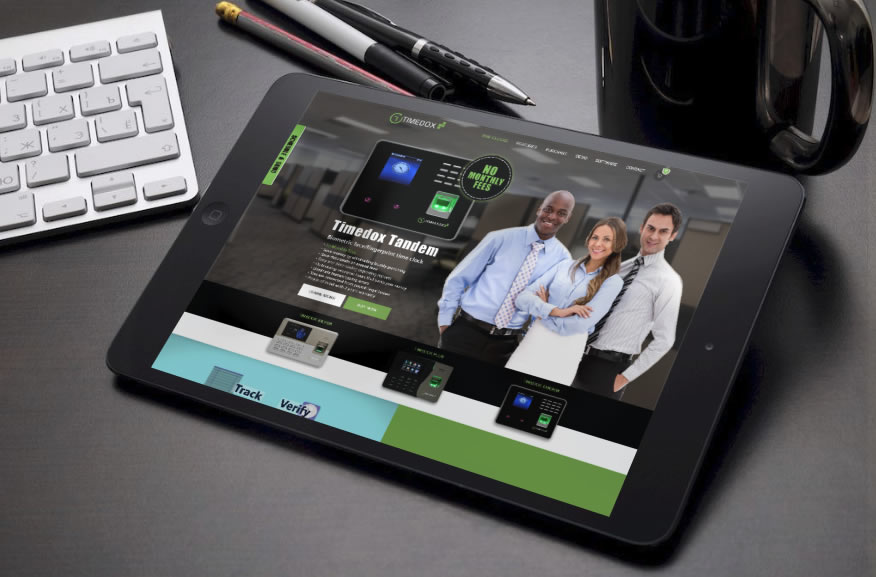
Beginning their journey in 2006, TIMEDOX has been providing time and attendance solutions nationally and internationally for businesses of all sizes; from “mom and pop”-sized joints with only one or two employees to multi-level corporations. Tens of thousands of ever-growing companies record their working hours using our equipment and software, now reaching over 60 million identity check transactions. They had hired another design firm out of India months ago and the end product the other company delivered was constructed in a way that made updating the website for the client not manageable. It had many errors. And was never completed. Timedox came to us here at Elegant Image Studios to get the site they initially visioned to have. A slick, professional, eye-catching, working website. CLICK TO ENLARGE IMAGES
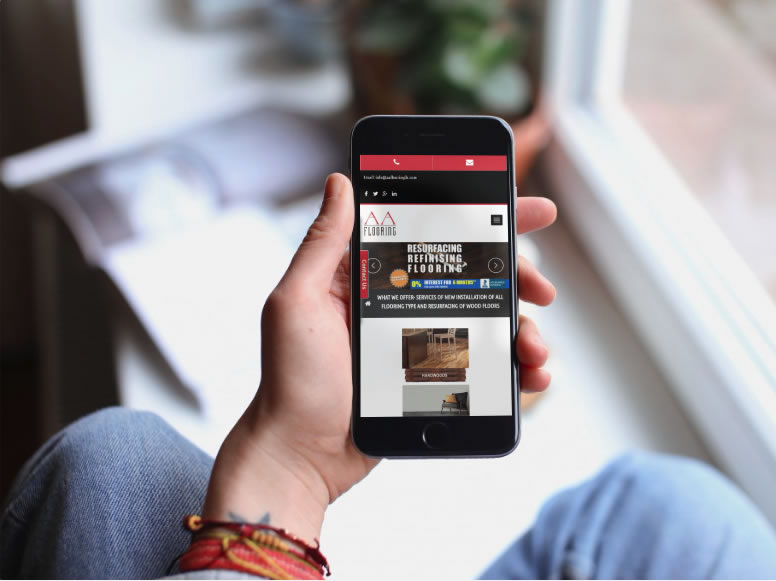
We are always here to help at Elegant Image Studios. We are going to share the top 5 web design tips for you to look for no matter what developer you hire for your next project. Site Is Not Mobile Ready: Responsive websites are a must! Every year, more and more web browsing is done on phones and other devices. Mobile is the now and it’s definitely not going anywhere. If your website cannot adapt to different screen sizes then your site is not mobile friendly. This tiny mistake could lead to losing out on multiple sales and conversions. So how do you fix the problem? You need a responsive website. Stale and Bland Content: If you want to generate long-lasting leads, you must have good content. Good copy will help you gain more site traffic and make people trust your company or service. Google recommends a 300-word minimum. Also, keep in mind, your content should always offer value to the customer in terms of tips and ideas. Original Photography is Important: This website mistake is probably the most common. Customers like to see visually appealing images when they visit a site. Taking the time to find high-quality images is easy and will definitely be beneficial in the long run. Poor Navigation: Without proper site navigation, your customers can become confused and overwhelmed. It’s important to limit the links in your menu and then put them in order that would make sense for your customers when they visit your site. Their needs to be a coherent direction or sequence of steps for the customer to take. The goal is for them to learn more about you and your services first. Bad Text: If your customer can’t read your content, then there’s a good chance there will be no sale. There are three main things that can affect the readability: font, color, and most importantly, size. It’s best to choose a font that is approximately 16 px. Another major point to keep in mind is that the size of your text will depend on the font style as well. When it comes to font colors, stick to a dark color if your background is light and vice versa. You want to make sure that your color palette is cohesive. We hope this will give you a better insight into making your website work better for you and your business. Whether you need to remedy your mobile ranking or want to jump ahead in the marketplace, we’ve got the answers you need, with innovative web design based on extensive market research. Please contact us at Elegant Image Studios (678) 457-7939 today and let us help your business grow!
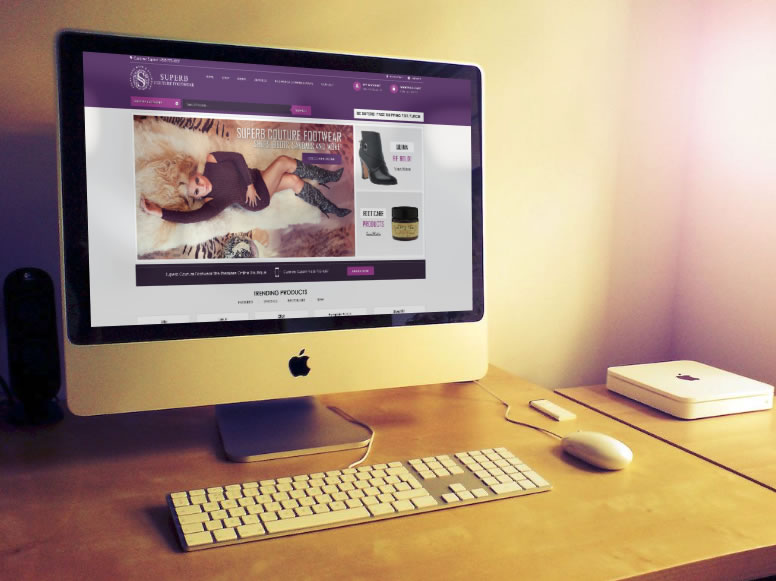
Superb Couture Footwear was founded by a woman who just wanted quality and fashionable footwear. Experiencing continued frustration about the lack of footwear in larger shoe sizes prompted the start of this company. For those who have experienced the same issues, you can look no further!
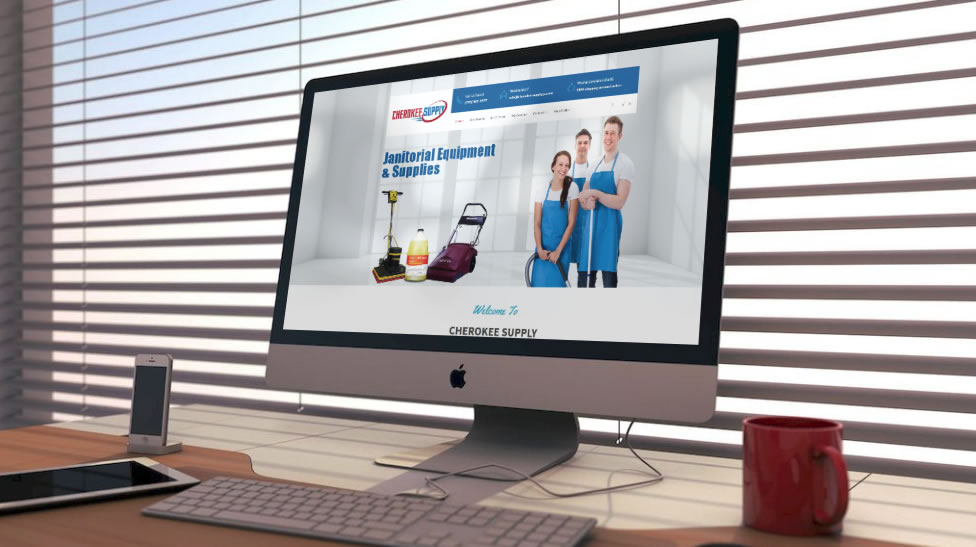
While their initial product offerings of janitorial breakroom supplies met the immediate needs of their customers, they were increasingly asked to provide other products. In response to those customer inquiries, they expanded their product offerings in 2010 to include office supplies, facility maintenance needs, and safety products. CherokeeSupplyGA.com brings a network of over 35 distribution warehouses to one site. CLICK TO ENLARGE PHOTOS

